BIOGRAPHY
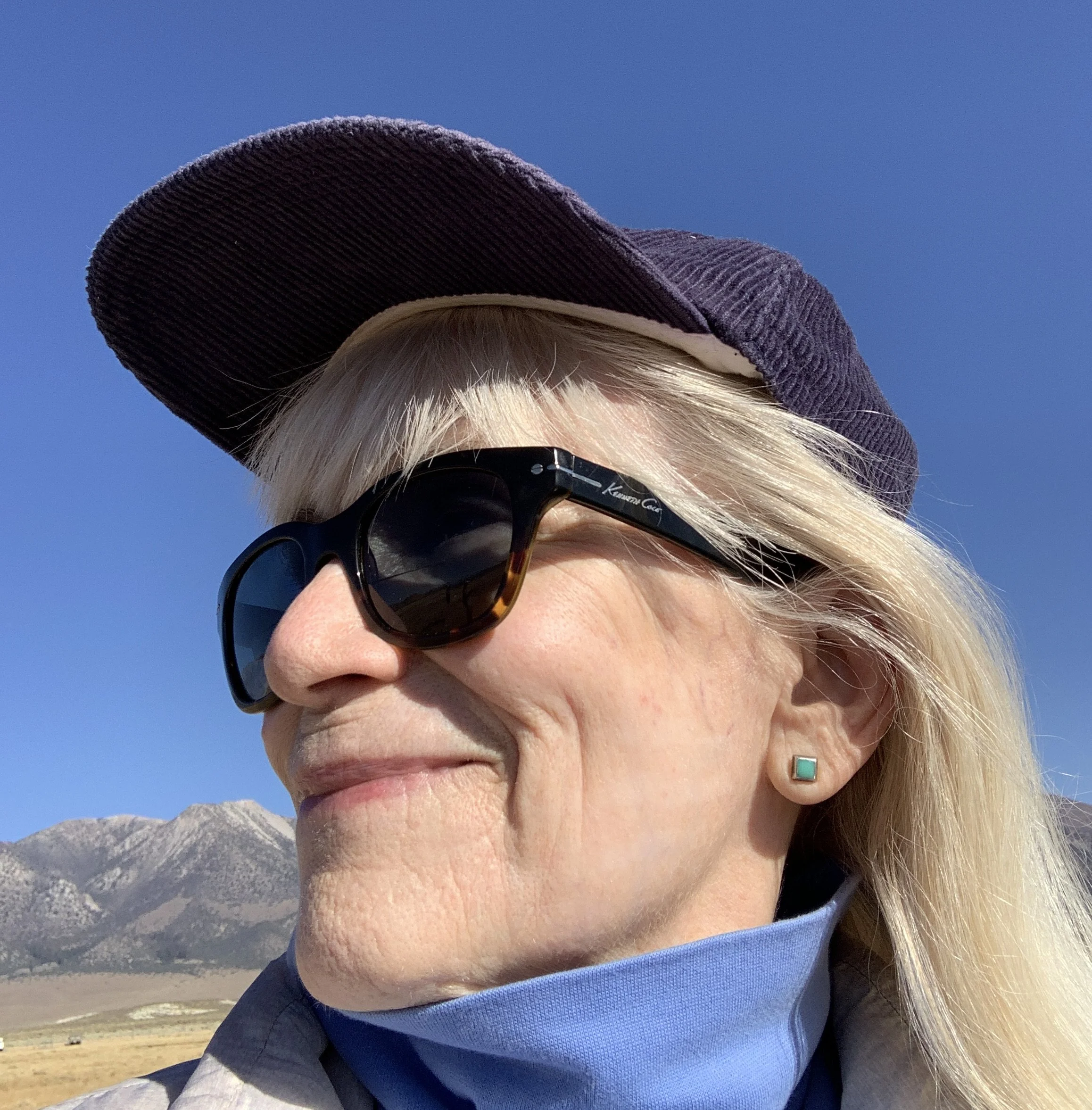
Susan Chorpenning is an artist known for her installations, sculpture and works on paper showcasing light and visual phenomena. Having three degrees from UC Berkeley, and with a somewhat rebellious bent, she announced upon graduation that she wanted no part of the mainstream commercial art world, which she viewed as the art-industrial complex, then making work which was often entirely without material presence. Now, in later years, she does make work which exists on a material plane, including paintings, works on paper, and sculpture.
From studies in CA, she moved to NY, living and working there from 1980-2001, gladly returning to the golden light of Los Angeles in August, 2001. While in NY she not only showed her work, but participated in WAC, the Women’s Action Coalition, chairing the Art Action Committee in the 1990’s, also chairing a Women’s Caucus for Art panel previewing the National Museum of Women in the Arts, now established in Washington DC.
In spite of her prejudicial politics, exhibitions have included Dangerous Curve and Phantom Galleries, Los Angeles, Chinati Foundation, Marfa TX, Stadtische Galerie, Würzburg, Kunstmuseum Heidenheim, Germany, and PS 122 in NYC. Her work has been collected by the San Diego Museum of Art, Kölnischer Kunstverein, Germany, and ART/OMI Foundation, NY, as well as numerous corporate and private collections. The LA Dept. of Public Affairs awarded her a permanent public sculpture commission, built with light and granite, on display at 450 Temple Street, Los Angeles.
Chorpenning worked in a studio in Altadena until 2025, when the Eaton Fire burned her studio and home, like so many others. Now she works with whatever materials present themselves, using light, reflection, paint, gold leaf and whatever comes to hand. She is continues to make siteworks, as well as light paintings and sculpture.
Light is the central material of my practice. I work with light as a perceptual and spatial medium, engaging the relationship between vision, the body, and time.
For more than thirty years, my work focused on site-specific installations using daylight, shadow, and artificial light, developed as the Light Rooms and Dark Rooms series. Light crossing space was a central theme, watching it, noting it, along with the physical experience of it. Memory emerged through light’s persistence and disappearance - embedded in duration, my notations indicated the futility in capturing it. These works emphasized perception as a temporal experience rather than a fixed image.
STATEMENT

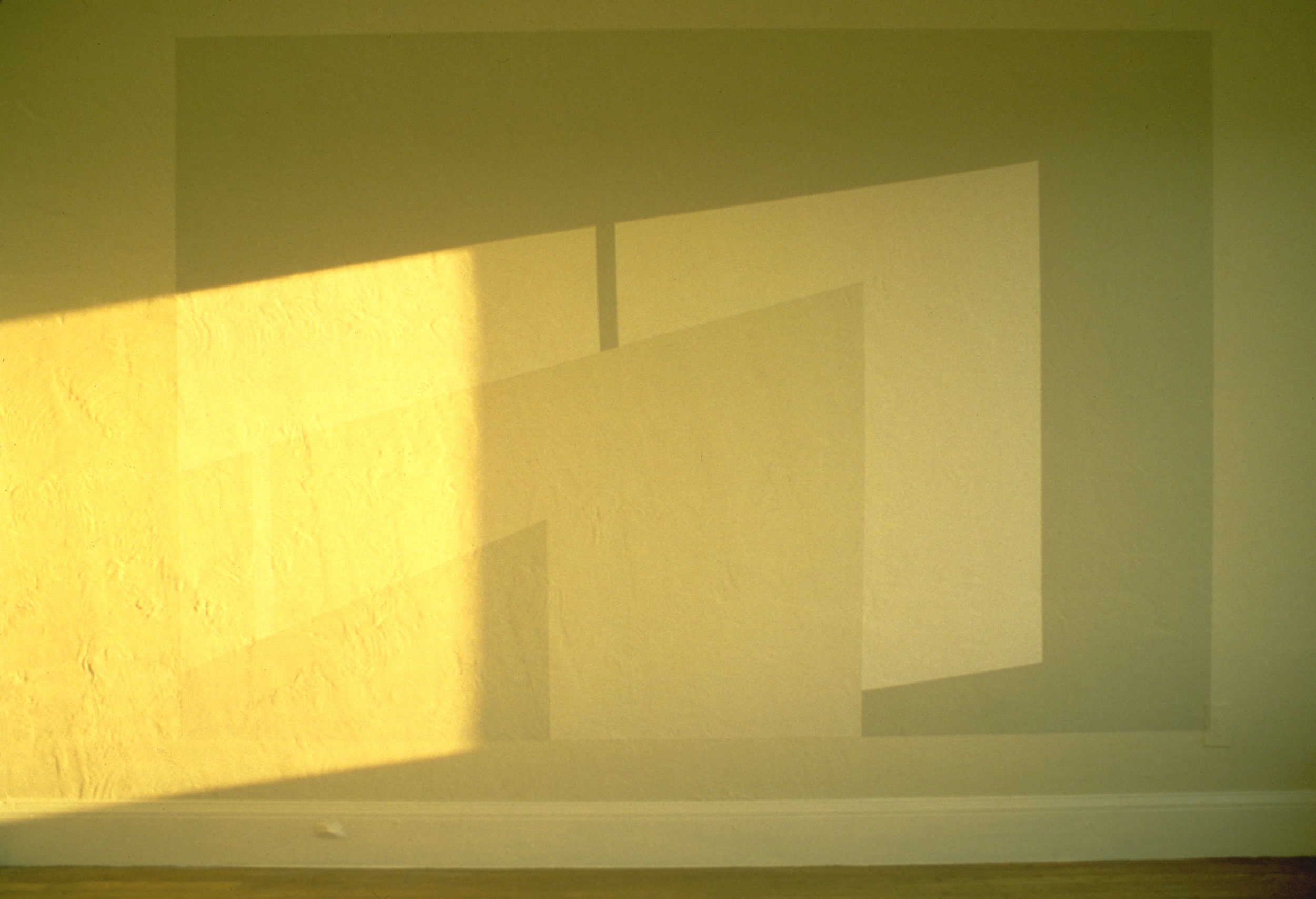
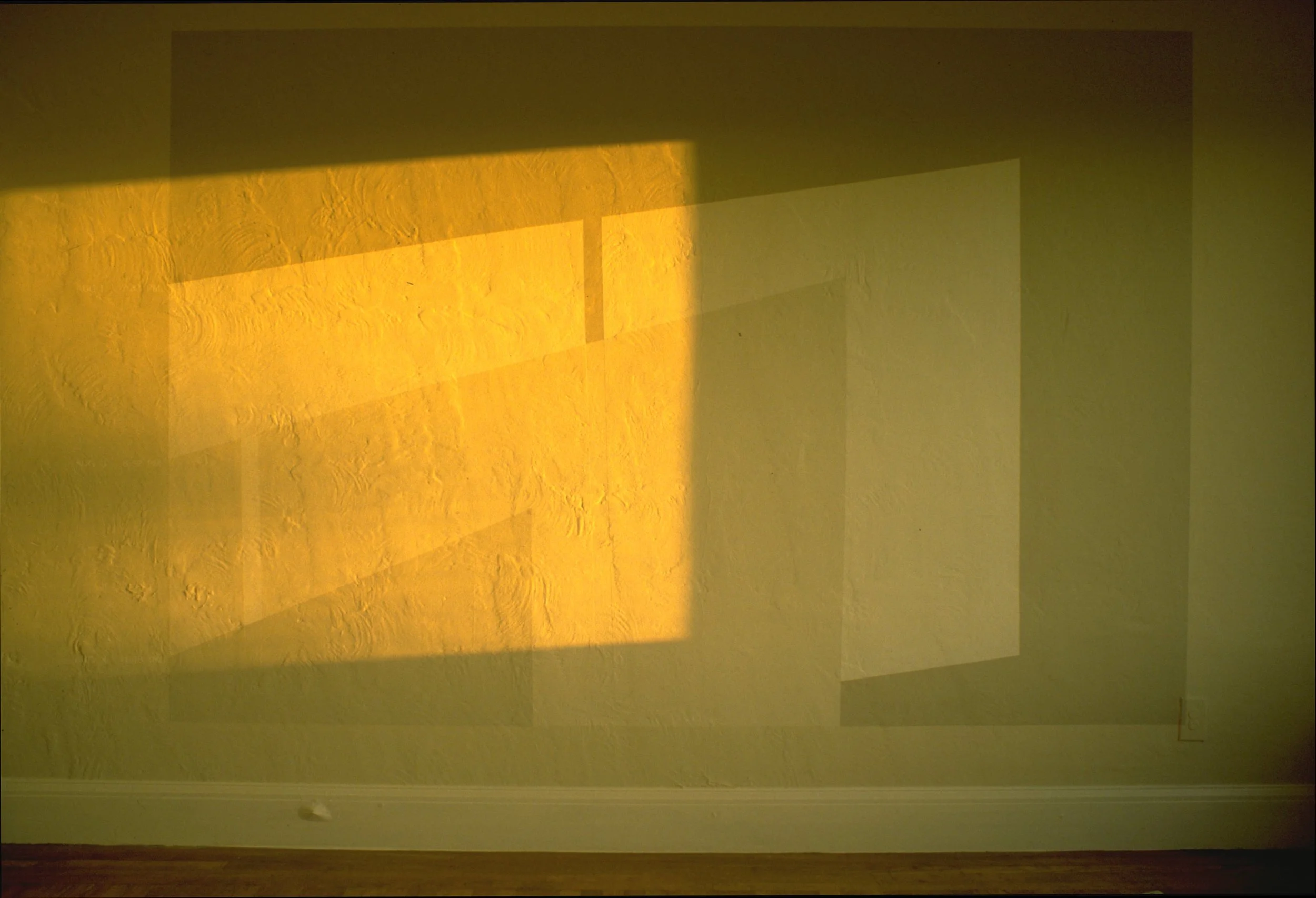
Although often seen through painting, I think as a three-dimensional artist. Recent works move between painting and sculpture, employing responsive surfaces that absorb, reflect, and emit light, often beyond the flat plane. Some series, Layers and Planes and Paper Light, shift off the wall, situating themselves between painting and sculpture. Many works employ materials that actively respond to light—tonal shifts as the viewer moves, the glow of gold leaf, the granular shimmer of micaceous iron oxide or the afterglow of phosphorescence. Some surfaces absorb light; others reflect it, engaging a visual equivalent of touch, appealing to embodied perception rather than image alone.
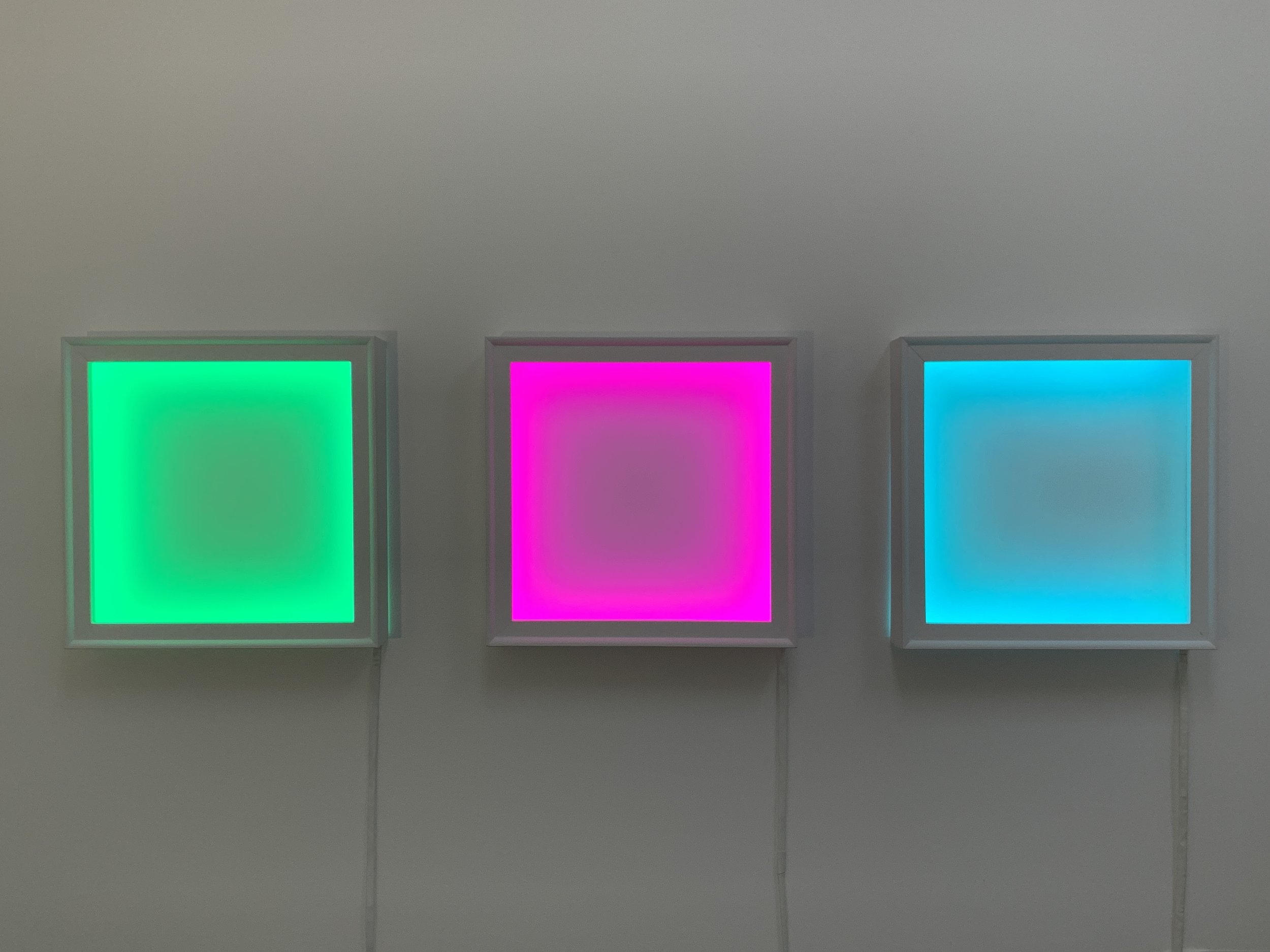
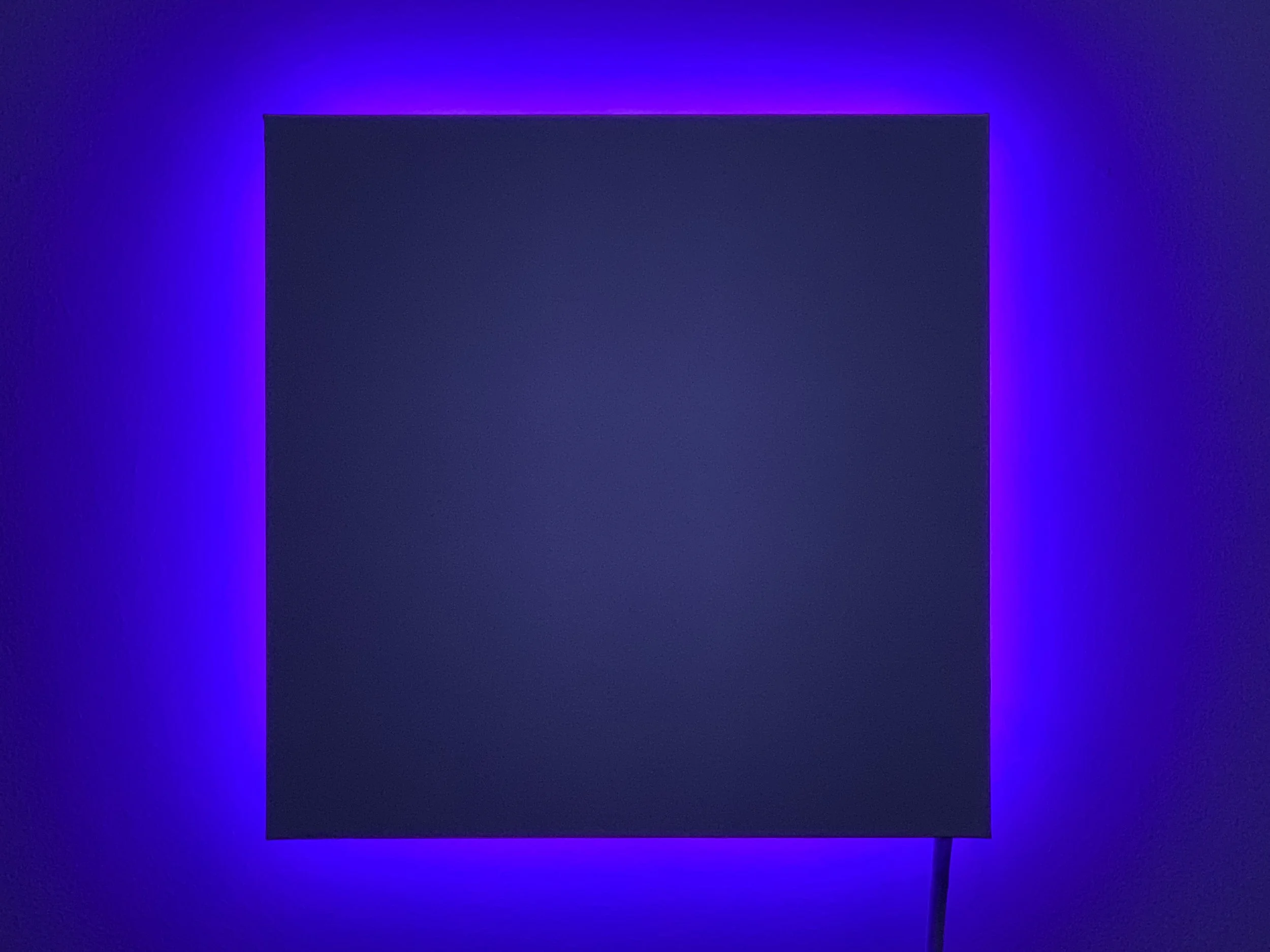
More recently, the work has returned to literal light through the Inner Light, Outer Light, and Light Circles series. These current light works incorporate slowly shifting colored light, cycling through the spectrum to produce an atmosphere that is meditative, yet continually in flux, engaging the viewer through presence, attention, and change.
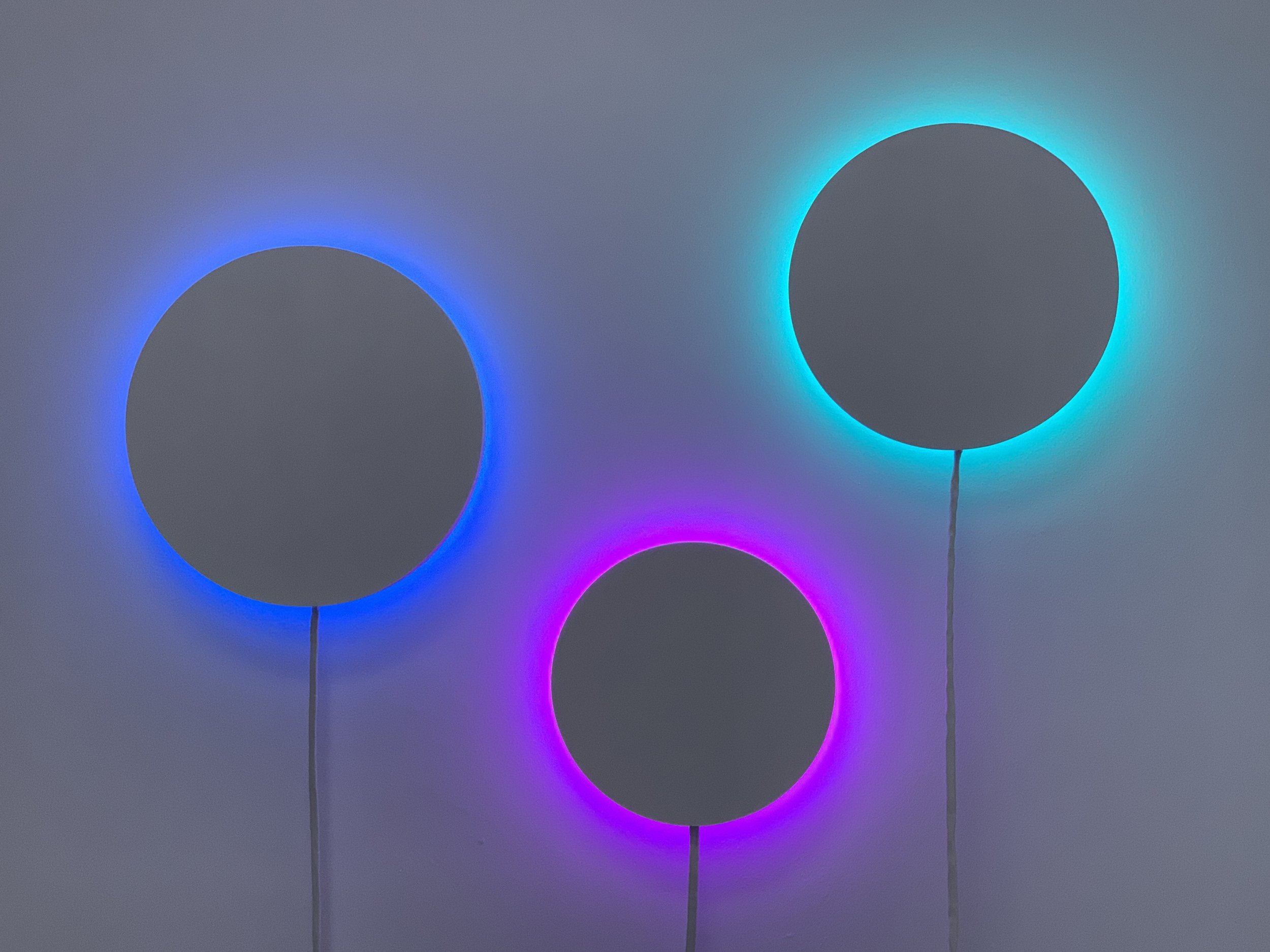
After losing my studio in the Eaton Fire, I returned to paper, rebuilding the archive of drawings that had been destroyed. I revisited the desert Moon Rocks installation, creating intimate paper works, even wall works using phosphorescent stones. The circular form—present in Light Circles and Moon Rocks—became central, leading to the Moon Circles series. Using phosphorescence, gold leaf, paint and paper, these works reopen the night sky, recalling the desert experience as both place and state of attention.
Throughout all the work, light’s transience mirrors the constant state of impermanence. Awareness of this temporality grounds my practice, understanding that change is our continual state, with moving, shifting light as our constant reminder.